Welcome to the Plane of the month!
You can find the featured plane for this month and all our past archives here.
MARCH 2026 FEATURED PLANE - RC Factory 42" EPP Edge 540 XL
Paul Schlitt (AMA 686272/FAA Registration #FA37WM3XE7)
Selected plane: RC Factory 42” EPP Edge 540 XL (distributed by Twisted Hobbies)
Model Specifications:
• Wingspan/Length = 42” (1060mm) / 43” (1120mm) AUW = 27 -30oz.
• E-flite 480 Brushless Outrunner Motor, 910 Kv: 3.5 mm Bullet
• Quantum 45A EVO Electronic Speed Controller
• HiTec HS-5087MH 21.9 g High Voltage Metal Gear Digital Micro Servo
• Flite Test Aura 5 Lite (6-axis flight stabilizer)
• Spektrum DSMX remote receiver
• Graupner E-Prop 12x6 (30-15cm)
• Thunder Power RC Elite Series 2250mAh 3-Cell 11.1V 55C LiPo
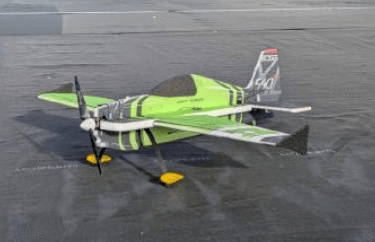
I selected this aircraft (Figure 1) as one of my favorites given that it has continues to help with improving my flight skills and the build is as simple as it gets. This plane is flown by a couple of other members at the field (far more proficient then me). It is designed for intermediate to advanced pilots. This plane differs from flat foamies, in that it has a symmetrical airfoil. It is designed for 3D aerobatics; however it’s also capable of precision aerobatics. You’ll find through your own research that the Edge 540 demonstrates very stable flight capabilities. I personally consider the flight characteristics of this plane are very predictable and it has allowed me to improve my skills in the area I’m focused on. Those characteristics are evident at slower flying (e.g., loops, snap-rolls, torque roll hover, high-alpha passes and inverted flight). This can be a benefit for pilots not accustom to 3D flying, thereby giving them time to react to their control inputs and build muscle memory in the process. The plane is benefited by its power to weight ratio.
The plane is made from expanded polypropylene foam (EPP), with carbon fiber flat strip used for structural reinforcement throughout the design (wings, fuselage, and elevator). The kit consists of eight pieces (and landing gear). I used Deluxe Material AD34 foam 2 adhesive for primary construction and foam safe cyanoacrylate glue (along with activator) for affixing carbon strip reinforcements. Upgrades are limited to an aluminum motor mount and fiberglass wheel pans. The kit come with EPP wheel pans, but depending on how rough you are with landings, you might find them breaking off. Although EPP is resilient to minor dig and dents, I elected to coat the leading edges of each control surface with foam armour (Deluxe Materials). You could accomplish the same thing with using blender tape (note, it might not stick as well), but I decided to try out the foam armour. So far I’m happy with this product.
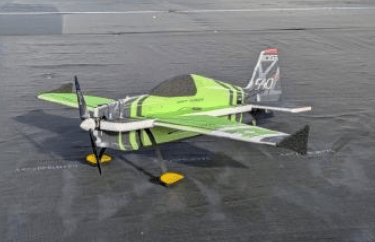
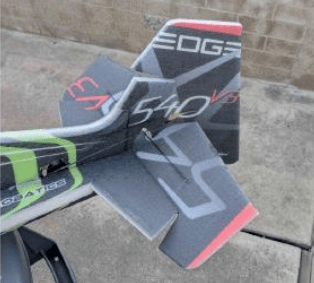
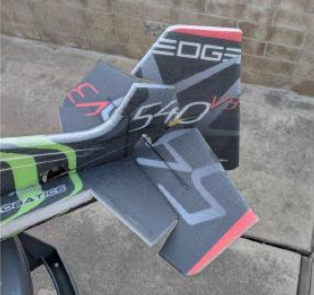
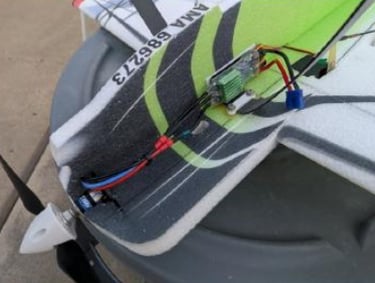
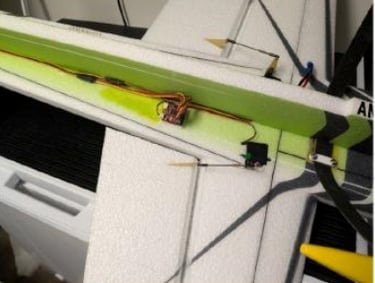
Due to its large control surfaces (Figure 2), I recommended that you use a good quality servo. When I was initially considering the purchase of this plane, one of the most beneficial recommendations that I found amongst the other superfluous information about the build was make sure you use high quality servos. The manufacture does provide a short build manual for their 42” EPP aircraft. There are lots of other posts for building this aircraft on the internet. My choice of motor and ESC is similar to what the manufacture recommends (Figure 3). Given the variable wind conditions at the field, I elected to use the Flite Test Aura 5 lite (Figure 4) for my receiver. This unit is 5 grams with flight control and stabilization functionality (3-axis gyro mode). I find this unit beneficial in reducing some of those environmental influences, thereby allowing me to focus on flying and improving a particular maneuver. However, it’s your choice on the receiver that you’re familiar with and that you’re comfortable with programming.
I elected to setup my flight modes on a three position switch, i.e., flight mode 1 is set to no stabilization, flight mode 2 is set to stabilization at midrates, and flight mode 3 is stabilization at 3D rates. I elected to place my gain settings on a dial knob so it can be tuned via the transmitter. The flight mode settings are very similar to those folks using a Spektrum AS3X+ receivers. Others might be using a particular receiver manufacture of their preference or assigning surface controls on individual switches.
I tried to focus on the key elements that I personally like and think are important when considering this plane. Currently, it’s hard for me to identify particular problems with how this plane performs, besides limits associated with my piloting skills. As I improve with a particular flight maneuver, my opinion could change.
Thanks for letting me share one of my favorite RC planes with you.
Figure 1.
Figure 2.
Figure 3.
Figure 4.